Locking Fuel Door Installation: Field Tips From the Shop
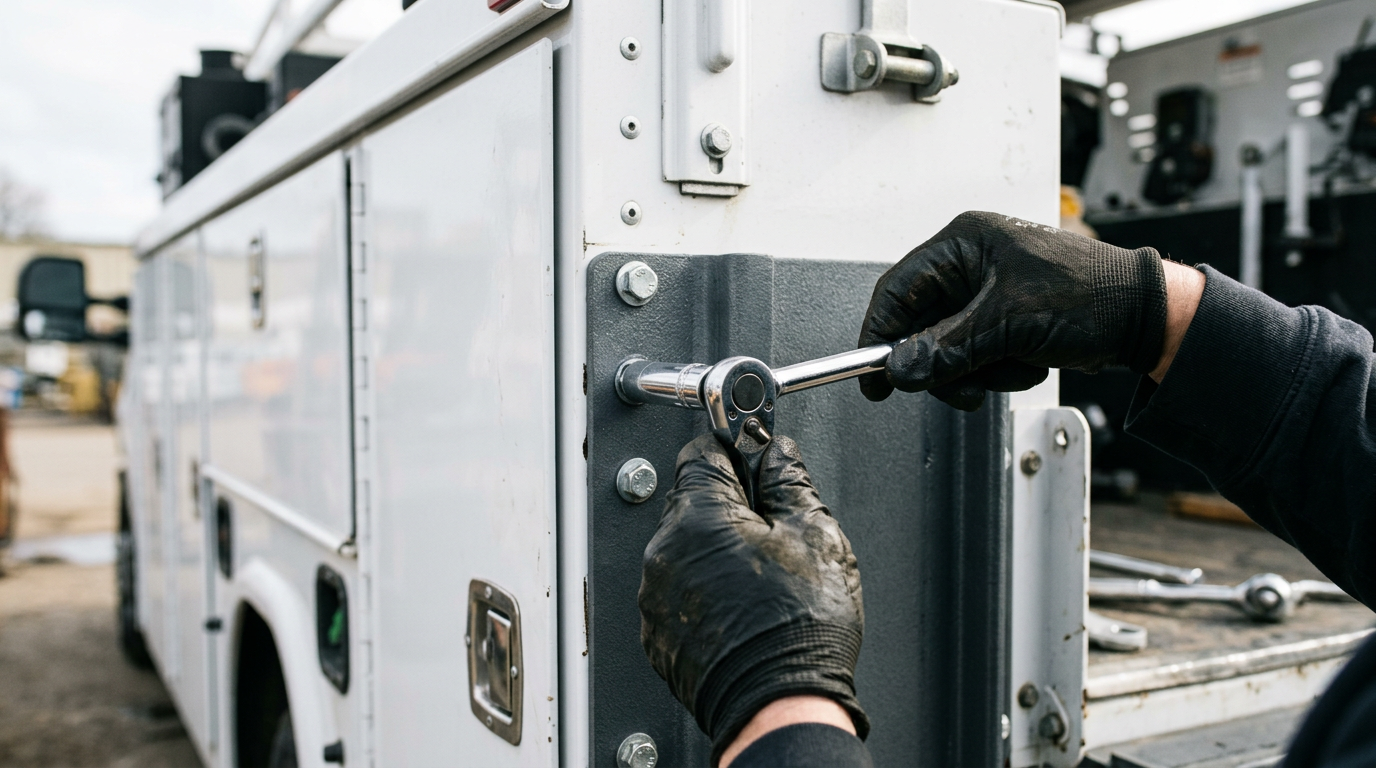
The Work Truck Fuel Vault is designed to bolt on with common hand tools in a few minutes. Most people get it right on the first try. These are the small things our installers do every time that make the difference between a clean job and a merely functional one.
Before You Start
- Work on a cool truck. Body panels expand in the sun and hardware torqued on a hot panel can loosen as it cools.
- Have the fuel level below three-quarters if you can. Nothing about the install touches the fuel system, but a full tank means fumes at the filler.
- Lay out the hardware first and confirm the count before anything goes on the truck.
- Dry-fit before you commit. Hold it in place, look at it from ten feet back, and check the alignment against the body lines.
Surface Prep Is Ninety Percent of It
Clean the mounting surface properly. Degrease it, get the road film off, and dry it fully. Work truck bodies collect a film of diesel mist and dust around the fuel door that you will not see until a rag comes away black.
If the panel has a dent, a raised seam, or old adhesive residue in the mounting footprint, deal with it now. A mount that sits on an uneven surface will rattle, and a rattle becomes a loose fastener over a few thousand miles of jobsite roads.
Get It Square to the Body, Not to the Opening
Upfitted fuel door cutouts are not always square to the world. If you align to the cutout you may end up visibly crooked against the body seams, which is the first thing anybody notices. Align to the strongest visual reference on that panel, usually a horizontal body line or the rub rail.
Mark your holes with a marker, step back, look again, then drill.
Use the Bezel When the Opening Is Recessed
If the fuel door housing is recessed more than an inch or the cutout is larger than the mount footprint, a finishing bezel closes the gap. It is not just cosmetic. A bezel gives you a flat, continuous bearing surface, which means even clamping pressure and no flex at the corners.
Torque By Feel, Then Check It Again
Snug the fasteners in a cross pattern rather than going around in a circle. Bring them all to light contact first, then tighten. Overtightening on thinner aluminum bodies dishes the panel around the fastener and looks bad permanently.
Recheck the fasteners after the first week of service. This is the single most-skipped step and the most common cause of a rattle complaint.
Use the Security Screws
Tamper-resistant hardware is the difference between an armored door and an armored door somebody unbolted with a screwdriver from the parts truck. Install the security screws, and keep the drive bit somewhere your techs can find it. Fleets should keep a spare bit in every service vehicle.
Seal Where It Matters
A thin bead of quality automotive sealant behind the mounting flange keeps water out of the fastener holes on steel bodies. Do not run a heavy bead all the way around the perimeter. Fuel filler areas need to breathe, and a fully sealed enclosure will trap moisture rather than shed it.
Key Management on a Fleet
Decide before you install whether each truck gets its own key or the fleet runs common keying. Common keying is far easier operationally: one key per driver, one key in the shop, one in the supervisor's truck. Label a spare set and put it somewhere that is not the vehicle.
Batch Installs on a Fleet
If you are doing twenty trucks, do them assembly-line style. One person preps surfaces, one marks and drills, one mounts and torques. Fleets routinely knock out a full yard in an afternoon. Fold it into scheduled maintenance and you lose no bay time at all.
Doing It At Build Time Instead
If the trucks are still at the upfitter, install at the build. It is a few minutes on the line, the truck goes into service already protected, and the customer never pays for a retrofit visit.
Protect the Fuel Door, Not Just the Cap
The Work Truck Fuel Vault is a patent-pending armored locking fuel door that bolts over the existing fuel door opening on a commercial work truck. It installs in minutes with common hand tools, needs no drilling into the chassis and no wiring, and it does not touch the fuel system. Two sizes cover the overwhelming majority of work truck openings.
Every unit ships free within the fifty United States and carries a limited lifetime warranty against defects plus a 30-day money-back guarantee. Not sure which size fits your truck? Send us a photo and a tape measure reading and we will confirm it before you order, or call 941-541-0089 and talk to a real person in Sarasota, Florida.
Ready to Protect Your Fuel System?
The RV Fuel Vault™ — the first locking fuel door purpose-built for Class A, C & Super C motorhomes.
Order Your RV Fuel Vault