Why Fuel Theft Spikes in Winter, and What Fleets Do About It
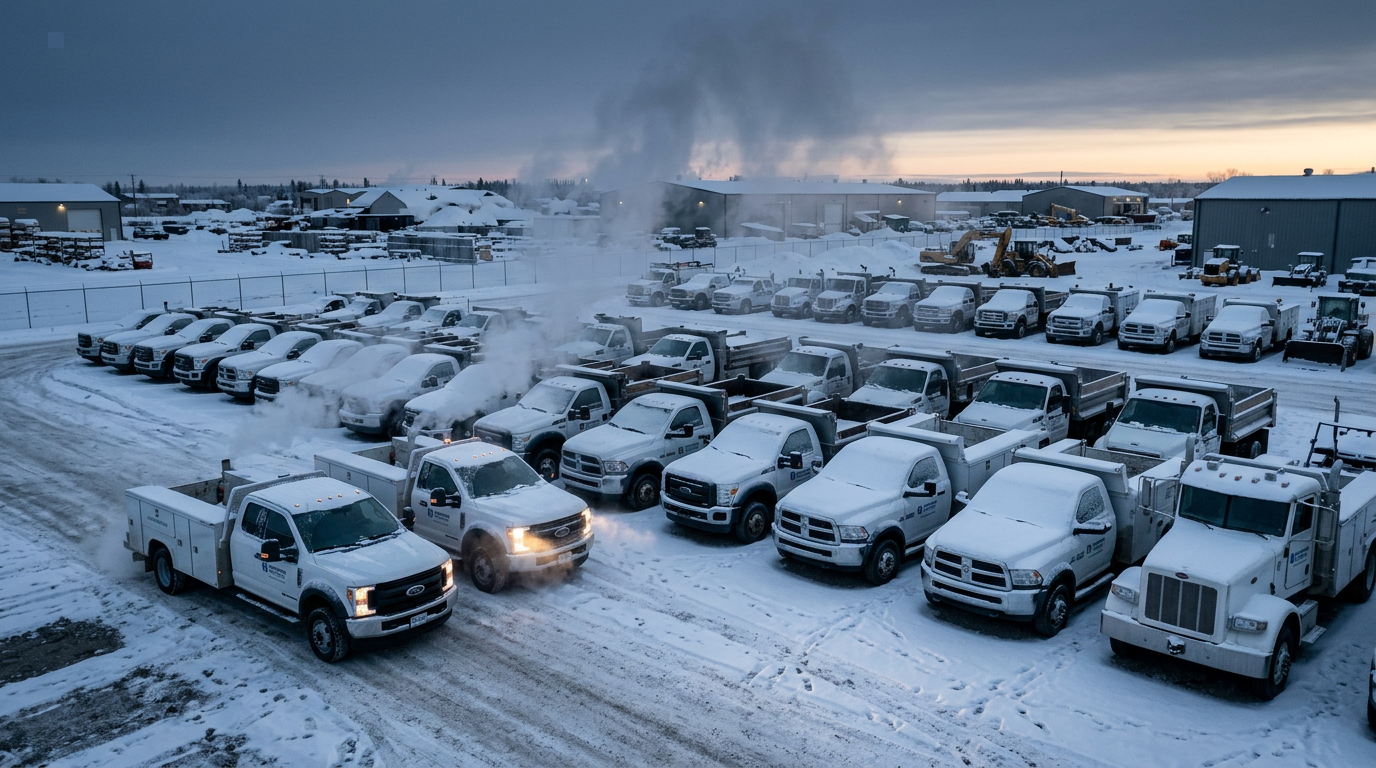
Ask any fleet manager in a northern state when their fuel gap gets worse and they will say winter without hesitating. It is not superstition. Several things change at once in the cold months, and every one of them works against you.
Darkness Is the Biggest Factor
In December a truck parked at 4:30 PM sits in the dark for fifteen hours instead of eight. That is nearly double the window during which somebody can work beside a vehicle unobserved. Nothing else on this list matters as much as that.
Heating Fuel Demand
Diesel and home heating oil are close cousins. When heating costs spike, so does the informal market for stolen diesel. A tank of fuel becomes a week of warmth for somebody, which changes the motivation profile from opportunistic to determined.
Trucks Sit Full More Often
Cold-weather practice is to park with a full tank to reduce condensation and water in the fuel. Good for the truck, bad for exposure. A yard full of topped-off trucks in a fifteen-hour night is the highest-value target your operation presents all year.
Idling Masks the Loss
Winter idling, block heaters, and PTO use in cold conditions destroy your normal efficiency baseline. A tank that reads low gets written off as a cold snap when it was actually siphoned. The noise in the data is exactly what makes winter theft go unnoticed until spring.
Fewer Eyes on the Yard
Shorter daylight, holiday schedules, and thinner crews mean fewer people walking the lot. Sites shut down for a week or two around the holidays and nobody is checking anything.
Snow Hides the Evidence
Spilled diesel on pavement is obvious. Spilled diesel on snow that gets plowed at 6:00 AM is gone. Footprints and tire tracks that would tell you exactly what happened are covered by the next storm.
What Fleets Do Before the Cold Sets In
- Audit before winter, not after. Establish your fuel-per-mile baseline in the fall while the data is still clean. Then you can tell a cold-weather efficiency drop from a theft pattern.
- Separate idling from loss. If your telematics reports idle hours, use them. Fuel burned at idle is fuel you can account for. What is left over is the real gap.
- Add lighting where the trucks sit. Not at the gate. At the vehicle rows.
- Change the parking geometry. Fuel doors facing in, toward the building or toward each other.
- Rethink topping off. Where condensation risk allows it, ending the shift at half a tank and fueling in the morning removes the prize.
- Walk the yard over holiday shutdowns. One drive-through a day during a two-week closure is worth more than any camera.
- Protect the fuel doors before November. Installing in a heated shop in October is a lot more pleasant than doing it in a snow-covered yard in January, and it means the protection is in place for the highest-risk stretch of the year.
Cold Weather and the Hardware Itself
Anything you bolt to a truck in a salt-belt winter has to survive salt, brine, and freeze-thaw cycling. That is a real consideration when choosing protection. Look for corrosion-resistant construction and a lock mechanism that will not seize when it is wet and then dropped to ten degrees overnight. A light shot of dry lubricant in the cylinder at the start of the season is cheap insurance on any lock, on any vehicle.
Protect the Fuel Door, Not Just the Cap
The Work Truck Fuel Vault is a patent-pending armored locking fuel door that bolts over the existing fuel door opening on a commercial work truck. It installs in minutes with common hand tools, needs no drilling into the chassis and no wiring, and it does not touch the fuel system. Two sizes cover the overwhelming majority of work truck openings.
Every unit ships free within the fifty United States and carries a limited lifetime warranty against defects plus a 30-day money-back guarantee. Not sure which size fits your truck? Send us a photo and a tape measure reading and we will confirm it before you order, or call 941-541-0089 and talk to a real person in Sarasota, Florida.
Ready to Protect Your Fuel System?
The RV Fuel Vault™ — the first locking fuel door purpose-built for Class A, C & Super C motorhomes.
Order Your RV Fuel Vault