7 Mistakes You're Making with RV Fuel Security (and How to Fix Them)

Fuel theft is no longer a minor inconvenience. In September 2026, the U.S. national average diesel price crossed $6 per gallon for the first time, according to Reuters reporting on GasBuddy data. AAA’s national average was approximately $6.06 per gallon around the same time.
That changes the economics of RV fuel theft.
A 40-gallon siphon represents roughly $240 in stolen fuel. A 60- to 65-gallon tank represents approximately $360–$400. If contaminated fuel reaches a high-pressure common-rail system, the repair can climb to $10,000–$15,000 or more.
Your motorhome’s exposed filler area is a silent threat. At truck stops, campgrounds, rest areas, and winter storage lots, it can become one of the easiest targets on the vehicle.
Below are seven common motorhome fuel-security mistakes, and the practical fixes.
Mistake 1: Trusting a $20 Locking Gas Cap as Real Protection
The problem
A locking gas cap secures one component: the cap itself.
On many motorhomes, the fuel cap sits on an exposed exterior panel. There is no recessed automotive fuel door surrounding it. The filler neck, hose connection, and surrounding bodywork may remain completely accessible.
Threaded plastic or light metal caps can be pried, drilled, twisted, or ripped away. Even when the cap remains intact, a determined thief may attack the exposed filler hose below it.
A search for a Ford E-350 or E-450 locking gas cap or Ford F53 / Workhorse locking gas cap often leads owners toward a cap-only solution. That can be better than an unlocked cap, but it does not secure the entire fuel-access area.
The consequence
A locked cap may slow access through the opening while leaving other routes completely exposed. It also does nothing to stop debris, water, sugar, or other contaminants from being introduced around the filler neck or onto nearby components.
The fix
Use the cap as one layer, not the entire security system. Add a purpose-built locking fuel cap cover for your RV that physically shields the cap, filler neck, hose connection, and surrounding area.
A locking fuel door provides the barrier that a twist-on cap cannot.
Mistake 2: Leaving the Fuel and DEF Fill Points Completely Exposed
The problem
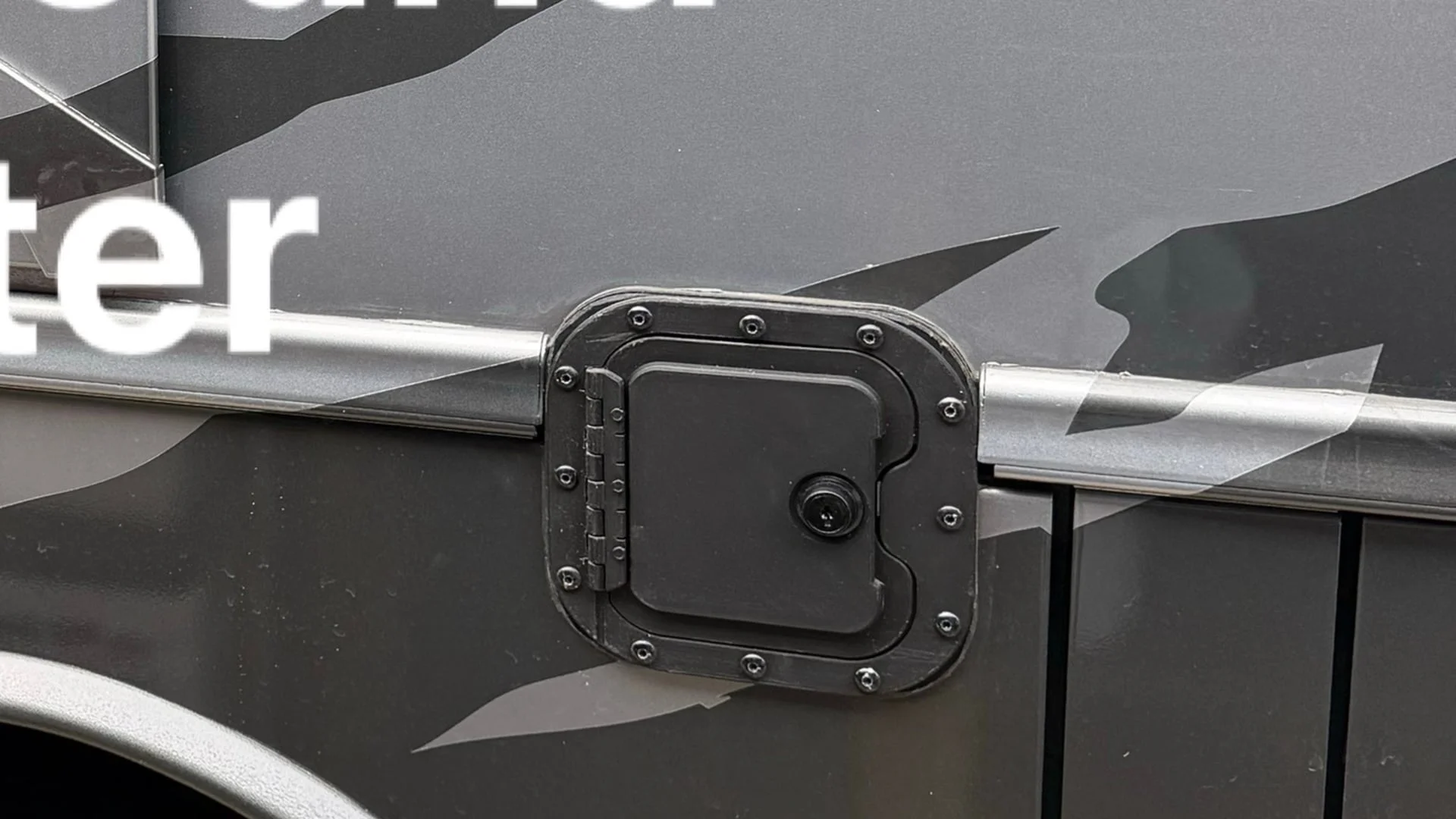
Many motorhomes leave the fuel cap exposed from the factory. Others use a thin plastic bezel or decorative access door that provides convenience but little meaningful resistance to prying, impact, or tampering.
The same problem can affect the DEF fill point. A blue DEF cap positioned beside the diesel filler may be easy to reach without tools.
The consequence
Factory trim is not an armored barrier. An exposed filler area gives a vandal direct access to:
- The fuel cap and filler neck
- The filler hose and connection points
- The DEF cap and fill port
- Surrounding wiring, trim, and body components
This is a serious weakness for motorhomes that spend time in public parking areas or remain unattended for weeks.
The fix
Install a locking fuel door designed specifically for the chassis and filler geometry. The RV Fuel Vault uses a 3/16-inch thick, fiber-filled polymer that is UV-stabilized, corrosion-proof, and resistant to temperature extremes, salt, and diesel exposure.
It replaces a completely exposed target with a finished, lockable barrier.
Mistake 3: Parking with the Fuel Side Facing an Isolated Area
The problem
Parking location is part of motorhome fuel security. Owners often choose a convenient space at the outer edge of a campground, rest area, or storage lot without considering which side of the vehicle faces away from people.
An exposed fuel area facing a dark fence line, wooded edge, or empty lane gives a thief privacy and time.
The consequence
Even a good physical lock becomes less effective when an attacker can work undisturbed. The outer edge of a lot can be a prime hunting ground because there is less foot traffic, less lighting, and less chance of being noticed.
The fix
When practical:
- Park with the fuel-cap side facing your campsite, building, or another occupied area.
- Place the fuel side near a fence, barrier, or other obstruction that limits access.
- Use motion-activated lighting around the vehicle when stored at home.
- Avoid isolated spaces during overnight stops when a better-lit option is available.
- Do not leave the same side of the RV exposed in an unmonitored storage location for months.
These steps cost little or nothing. Combined with a locking fuel door, they reduce opportunity.
Mistake 4: Storing a Full Tank Through Winter in an Unmonitored Lot
The problem
Winter storage creates a long window of opportunity. Many owners fill the tank before parking, then leave the motorhome unattended in a storage yard or remote lot for several months.
At approximately $6 per gallon, the liquid value is significant:
| Tank volume | Approximate fuel value |
|---|---|
| 40 gallons | $240 |
| 60 gallons | $360 |
| 65 gallons | $390 |
The consequence
A full tank is stored cash. If the filler area is exposed, a thief may steal hundreds of dollars in fuel, or introduce contamination that creates a far larger repair bill.
A contaminated high-pressure diesel system can require replacement of injectors, pumps, filters, rails, and related components. Repairs can reach $10,000–$15,000+, depending on the damage and the chassis.
The fix
Before winter storage:
- Install a locking fuel door.
- Protect both fuel points on dual-tank motorhomes.
- Secure the DEF fill point where applicable.
- Photograph the filler areas before storage.
- Perform a walk-around after the RV is returned to service.
- Use a monitored, well-lit storage facility whenever possible.
Preventative hardware costs far less than replacing a tank of diesel, or rebuilding a contaminated fuel system.
Mistake 5: Securing Only One Fill Point on a Dual-Tank Super C
The problem
Some Super C motorhomes use split front and rear fuel tanks with separate fill points. The Grand Design Lineage F600, for example, may have front and rear tank access that must be treated as two separate security points.
Protecting one side while leaving the other uncovered creates an obvious weakness.
The consequence
A thief does not need to defeat the protected side. The uncovered filler becomes the entry point for siphoning, contamination, or vandalism.
This is a common oversight when owners search for a Ford F600 fuel cap cover but order only one door without confirming the vehicle’s complete fuel layout.
The fix
Inspect both sides of the motorhome before ordering. Dual-tank Super C owners generally need a set of two locking fuel doors so both filler areas are protected.
The same principle applies to Ford F-550, Ford F-600, and other chassis configurations: verify the exact year, model, floor plan, and number of fill points through the RV Fuel Vault fitment database.
Mistake 6: Ignoring the DEF Tank
The problem
Diesel theft gets attention because the fuel has obvious resale value. DEF is often overlooked because it is not combustible fuel.
That is a mistake.
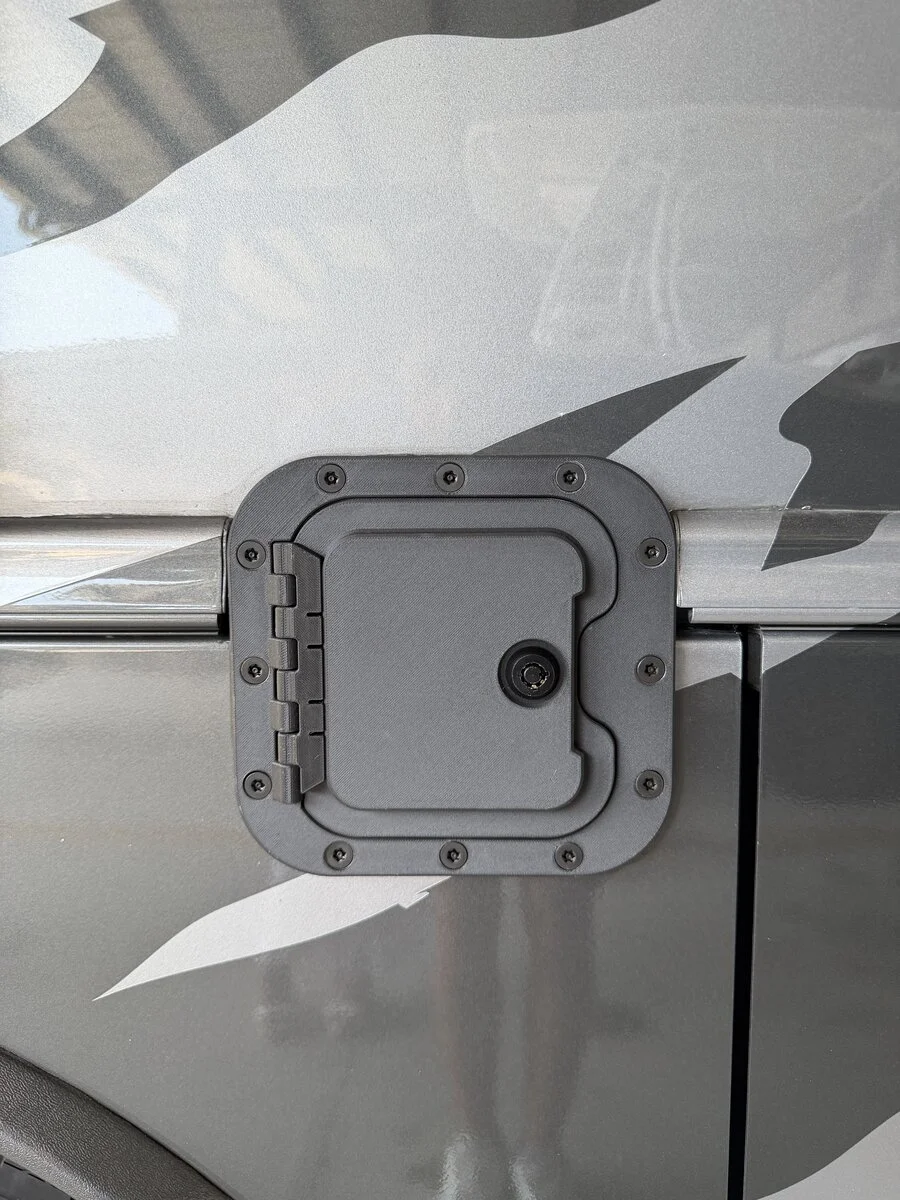
An exposed blue DEF cap invites contamination, deliberate tampering, or cross-contamination with diesel, water, dirt, or other fluids.
The consequence
DEF contamination can damage the dosing system, DEF pump, SCR catalyst, and NOx sensors. A serious event can create a $5,000–$10,000+ repair, especially when the system requires flushing, component replacement, and diagnostic work.
The emissions system may also trigger warning lights, reduced-power operation, or a no-start countdown.
The fix
Protect the DEF fill point with a cover designed for the complete access area. For Super C owners, The RV Fuel Vault offers a 3-pack that includes DEF coverage along with protection for the fuel fill points.
If you suspect DEF contamination, do not assume dilution will solve it. Stop, document the condition, and contact a qualified diesel technician.
Mistake 7: Never Checking for Signs of Tampering
The problem
Many owners perform a tire and fluid check before a trip but never inspect the fuel-access area. That leaves them vulnerable to discovering a problem only after the engine has started.
The consequence
Warning signs may include:
- A loose, damaged, or misaligned cap
- Scratches around the filler bezel
- A forced or damaged lock
- Diesel or DEF odor
- Wet spots below the filler area
- Unusual fluid residue
- Dirt, sand, sugar-like granules, or debris near the opening
- A missing seal or displaced trim
Starting the engine after contamination can circulate the material through expensive components.
The fix
Add a 60-second fuel-security inspection to every pre-trip walk-around:
- Look at each fuel and DEF access point.
- Check the lock, door, fasteners, and surrounding panel.
- Look underneath for wet spots or leaking fluid.
- Smell for unusual diesel or chemical odors.
- Check for debris or signs that the area was opened.
- If contamination is suspected, do not start the engine.
- Photograph the area and arrange professional inspection or towing.
A quick inspection can prevent a minor security incident from becoming a major mechanical failure.
The Practical Cost of Prevention
| Scenario | Approximate exposure |
|---|---|
| 40 gallons of stolen diesel | $240 |
| 65 gallons of stolen diesel | $390 |
| Serious common-rail contamination | $10,000–$15,000+ |
| DEF/SCR contamination repair | $5,000–$10,000+ |
| RV Fuel Vault single door | From $159.95 |
| RV Fuel Vault set of two | From $319.95 |
| RV Fuel Vault 3-pack with DEF cover | From $479.95 |
The RV Fuel Vault installs in approximately 8–15 minutes with basic hand tools. It bolts on without drilling, cutting, or modifying the motorhome.
It is available for motorhomes built on Ford F-550, Ford F-600, Ford E-350, Ford E-450, Ford F53, Workhorse, and other supported chassis platforms. Confirm your exact fitment through the Ford fitment page or the full fitment database.
Bottom Line
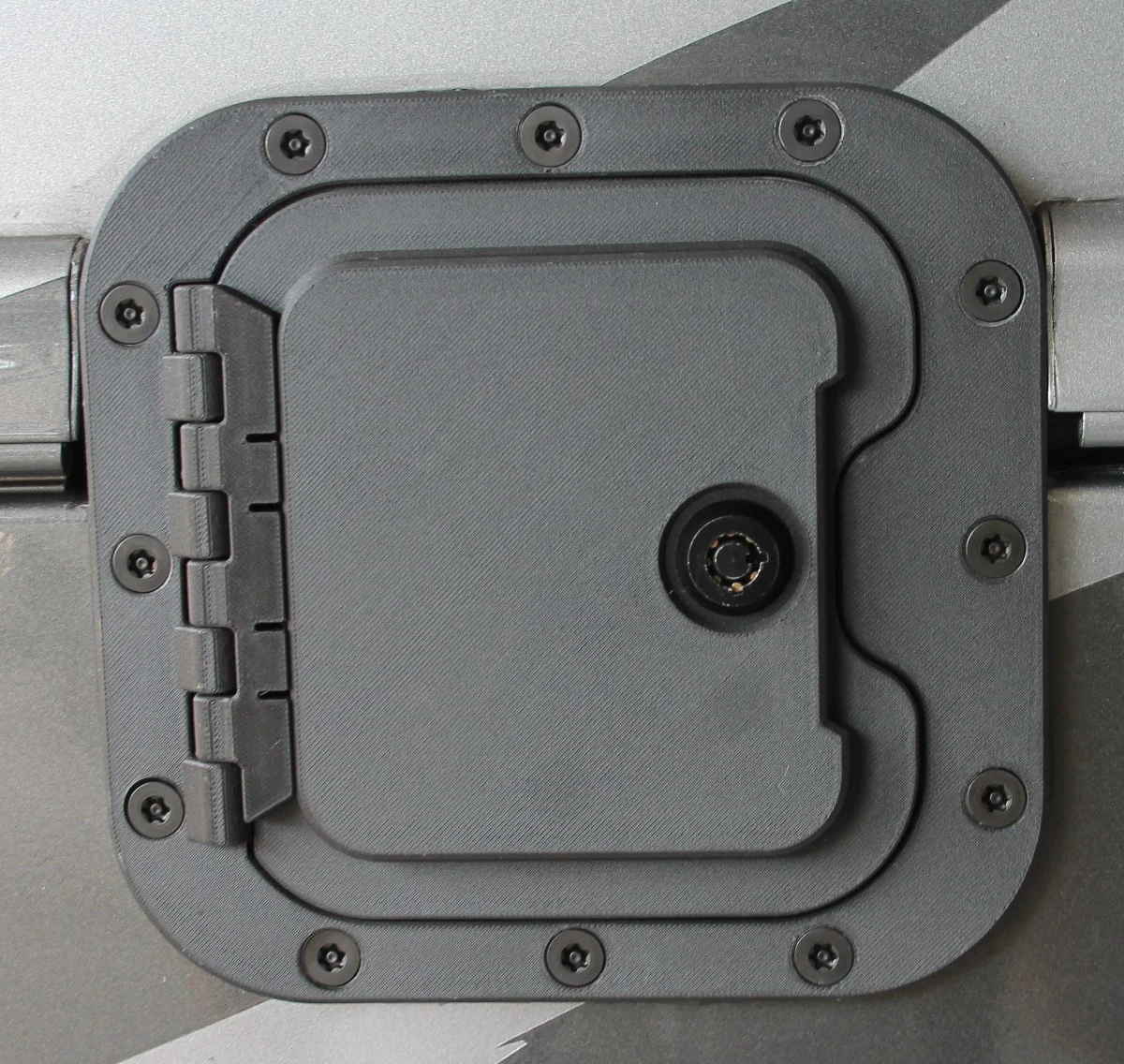
A locking cap alone is not complete RV fuel theft prevention. It protects the opening while leaving the surrounding filler area, hose connection, and sometimes the DEF port completely exposed.
For serious motorhome fuel security and diesel fuel siphoning protection, secure the entire access area:
- Choose a single-door cover for one fuel point.
- Choose a set of two for dual-tank Super C motorhomes.
- Choose the 3-pack with DEF coverage when your rig has exposed diesel and DEF fill points.
Protect the fuel you paid for, the emissions system beneath your coach, and the value of the motorhome itself. Find your fit and order The RV Fuel Vault, proudly made in the USA and backed by a limited lifetime warranty.
Ready to Protect Your Fuel System?
The RV Fuel Vault™ — the first locking fuel door purpose-built for Class A, C & Super C motorhomes.
Order Your RV Fuel Vault